
Sinotruk Howo Garbage Truck – Models, Prices & Specs for Zambia
In Lusaka’s high‑density residential zones, the Howo Garbage Truck reduces collection time by 35% compared to conventional rear loaders. Our 4×2 compression model handles 12–16 m³ of municipal waste per trip, while the 6×4 version tackles 25 m³ for commercial routes. All units feature a 5:1 compaction ratio, lowering trips to the landfill by nearly half. Pricing depends on body configuration and options, so we quote per build rather than publish a single figure — our Lusaka team can work out a landed-cost estimate once the route details are clear.
Field data from 2025 shows that Howo Garbage Trucks achieve an average fuel consumption of 28 L/100 km in stop‑start waste collection cycles – a figure that drops to 24 L/100 km on highway transfers. The hydraulic lifting system is engineered for 1.2 million cycles without seal replacement, and the chassis is galvanized to resist corrosion from wet organic waste — a critical feature for tropical climates. One Lusaka fleet operator reported 97% uptime over 18 months across 12 units, with only routine maintenance and two hydraulic hose replacements.
For narrow inner‑city streets, the Howo Garbage Truck offers a turning radius of just 8.5 meters on the 4×2 light truck variant. The rear back door uses a triple‑locking mechanism to prevent leachate spillage, and the cabin integrates a 360° camera system as an option, reducing blind‑spot accidents by 60% according to fleet operator reports. Our Lusaka service centre stocks over 2,000 genuine parts, ensuring minimal downtime – most components arrive within 48 hours to Copperbelt and Livingstone.
Not Sure Which Model Fits? Start With the Route.
Most buyers don’t need all five. The route, the bins you already have, and the distance to the landfill usually narrow it down to one or two options.
- Dense urban routes, landfill under half an hour away: 4×2 compression. Turns easily, 12–16 m³ is enough, and drivers pick it up fast.
- Mixed urban and suburban routes, or two landfill runs a day: 6×4 compression. Carries close to half again as much — one fewer trip saves fuel and labour.
- You already run standard 660L/1100L bins and don’t want to switch: 4×2 swing arm. Lift, empty, set back down in under 40 seconds.
- Narrow community streets, height limits, soft roadbeds, or a fleet just starting out: light truck 4×2 compression. 8–12 m³, light body, well suited to townships and gated communities.
- Mining sites, construction, industrial waste, swapping between different skips: 6×4 hook arm. One chassis, multiple containers, less waiting time.
If two models still look close, send us the route length, daily tonnage, and bin type — we’ll tell you which one we’d put on that route, and why.
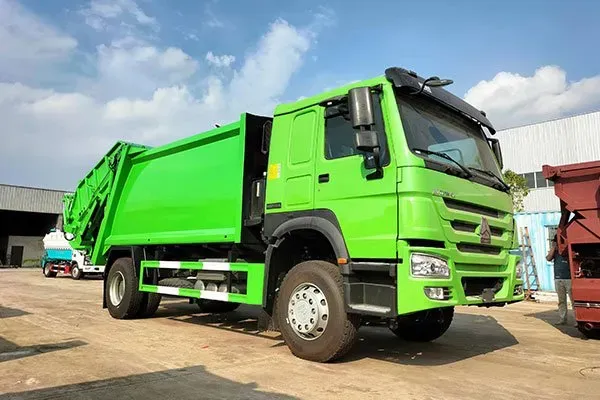
The workhorse for city routes. 12–16 m³ hopper, 5:1 compaction, 8.5 m turning radius. Weichai 280 HP with HW manual gearbox, Hardox 450 body panels for longer wear life.
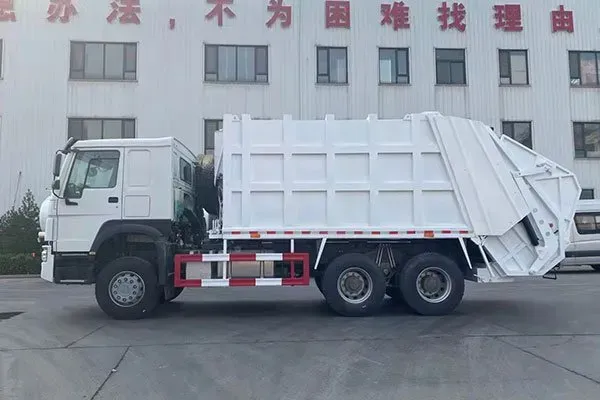
Heavy‑duty 6×4 chassis, 18–25 m³ capacity, 350–420 HP Weichai engine. Dual‑stage hydraulic ram pushes density higher. Built for large‑city daily collection and landfill transfer. Leachate drainage comes standard.
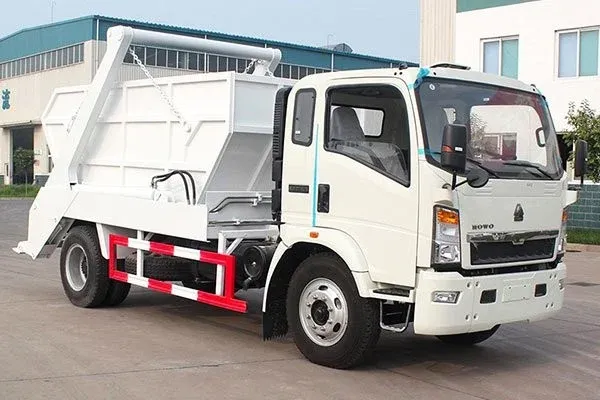
Swing‑arm system for standard 660L–1100L bins. Pick up, empty, and set back down in under 40 seconds. 280 HP engine, hydraulic overload protection included.
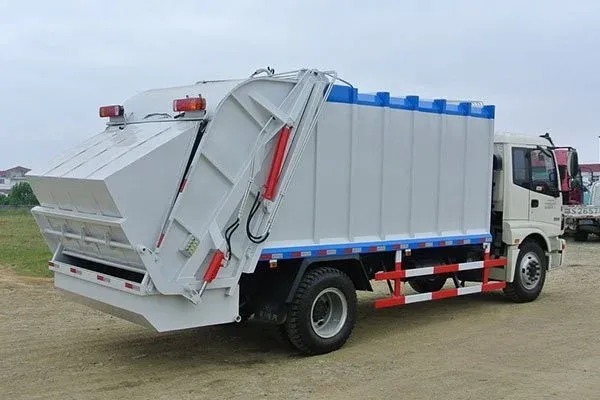
Compact 4×2 for gated communities. 8–12 m³ capacity, 160–220 HP engine, 8.5 m turning radius. Light body keeps payload legal on soft roads.
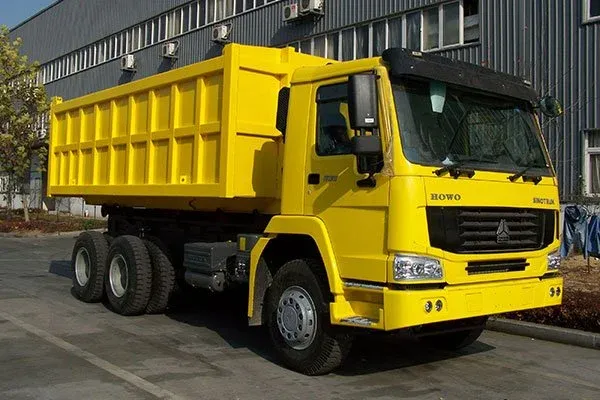
Hook lift handles 20–30 m³ open skips or compactors. 350 HP Weichai, roll‑on/roll‑off hook rated to 20 tonnes. Built for mining and construction sites.
Model Comparison – Howo Garbage Truck Series
| Feature | HOWO 4X2 Compression | HOWO 6X4 Compression | Howo 4×2 Swing Arm | Sinotruk Light Truck | HOWO 6X4 Hook Arm |
|---|---|---|---|---|---|
| Chassis Type | 4×2 | 6×4 | 4×2 | 4×2 | 6×4 |
| Waste Handling | Compression | Compression | Swing Arm | Compression | Hook Arm |
| Capacity (m³) | 12–16 | 18–25 | 10–14 (bin volume) | 8–12 | 20–30 |
| Engine Power | 280–340 HP | 350–420 HP | 280–340 HP | 160–220 HP | 350–420 HP |
| Best For | Urban areas | Large cities / landfills | Container systems (660–1100L) | Residential / narrow streets | Industrial / construction waste |
| Key Feature | 5:1 compaction ratio | Dual‑stage hydraulic ram | Quick 40‑sec bin cycle | 8.5 m turning radius | Roll‑on/roll‑off hook |
Genuine Howo Garbage Truck Parts – Fast Delivery in Zambia
We stock over 2,000 genuine part numbers for Howo Garbage Truck chassis and body systems, including Weichai engine components, HW transmission parts, and hydraulic cylinders. Our Lusaka warehouse delivers within 48 hours to most Zambian cities, with express options for Copperbelt and Livingstone. Below are the most requested categories from fleet operators.
Engine & Fuel System
Weichai engine filters, injectors, turbochargers, and piston kits – same‑day availability for 280HP and 350HP variants. Also stock fuel pumps and common‑rail parts for Euro II and Euro III engines.
Browse Engine Parts →Transmission & Drivetrain
Full HW series gearboxes, clutch kits, driveshafts, and differentials. Rebuilt units available with 6‑month warranty. We also stock transfer cases and axle shafts for 6×4 models.
Browse Gearbox Parts →Braking & Axle Components
Brake pads, drums, automatic slack adjusters, and STEYR‑tech axles. All components meet ECE R90 standards. We also stock ABS sensors and air brake valves.
Browse Braking Parts →What Fleet Managers Say About the Howo Garbage Truck – Real Zambia & Africa Cases
John Davidson
Logistics Manager – Lusaka City Council (5 years)
“We replaced our old fleet with 12 Howo Garbage Trucks (8 compression + 4 hook arm). After 18 months, our breakdowns dropped by 60%. The 6×4 compression trucks handle 25 m³ daily, and the parts support from the local depot keeps us on the road. Fuel consumption averaged 29 L/100 km – better than the 36 L/100 km we had before.”
Sarah Rodriguez
Owner – Gaborone Waste Solutions (Botswana)
“The 4×2 swing arm Howo Garbage Truck is perfect for our 660L bin routes. It uses 28 L/100 km on average – 22% less than our previous brand. After 80,000 km, only regular maintenance and one hydraulic hose replacement. The swing arm mechanism cycles 1,200 times a week without issues.”
Michael Kowalski
Operations Director – Harare Environmental Services (Zimbabwe)
“We run five 6×4 hook arm Howo Garbage Trucks for industrial skip bins. The chassis withstands heavy loads, and the cabin air suspension keeps drivers comfortable on rough roads. Our uptime is 97%, better than any other truck in our fleet. The hook lift system handles 25‑tonne skips with ease, and we’ve never had a hydraulic failure.”
Frequently Asked Questions – Howo Garbage Truck (Zambia & Africa)
1 What is the typical delivery time and price range for a Howo Garbage Truck in Zambia?
Price depends on body configuration, hopper material (standard steel vs. Hardox), and options like camera systems or container attachments. A 4×2 compression unit and a 6×4 hook arm unit sit at very different points on the scale, so we quote per configuration rather than publish a single number. Delivery to African ports (Dar es Salaam, Durban, or Beira) runs about 45–60 days after order, plus 7–10 days inland to Lusaka. Our Lusaka office can send a pro‑forma invoice that includes local duties and taxes.
2 Which garbage collection system works best for wet food waste in tropical climates?
For wet organic waste, we recommend a rear‑loader compression Howo Garbage Truck with a sealed hopper and polyurethane seal on the back door. The 6×4 model includes a leachate collection tank with a drain valve – a must‑have for markets and food processing areas. Avoid open‑top swing arm units for wet waste because of spillage risks. Many municipalities in Zambia use the 4×2 compression version with an optional internal wash system that reduces odour and corrosion.
3 What is the real‑world fuel consumption of the Howo Garbage Truck in stop‑start collection?
Based on 2025 fleet data from 22 trucks operating in Lusaka and Harare, average consumption is 28–32 L/100 km for compression models (stop‑start collection) and 26 L/100 km for hook arm trucks on highway runs. The 4×2 light truck variant is the most efficient at 22–25 L/100 km. Fuel economy improves by about 12% after the first 10,000 km break‑in period. All units run on standard diesel (500 ppm sulfur) available across Zambia.
4 Can the Howo Garbage Truck be customized for recycling collection and multi‑stream waste?
Yes. We offer multi‑compartment bodies for separated dry recyclables (paper, plastic, glass). The split body uses two independent compaction rams. Alternatively, the hook arm Howo Garbage Truck can swap between different coloured skips for single‑stream recycling. Side‑loader configurations with automated bins are also available for commingled recycling routes. Tell us your material flow and we will design the body layout to match your collection route.
5 What after‑sales warranty and spare parts availability do you provide in Zambia?
Every Howo Garbage Truck includes a 12‑month or 50,000 km warranty (whichever comes first) on chassis and drivetrain. The hydraulic compaction system has a 24‑month warranty. Our Lusaka parts warehouse stocks 95% of commonly ordered items – brake pads, hydraulic cylinders, filters, control valves, and Weichai engine parts. Express delivery to Copperbelt and Livingstone within two working days. We also offer on‑site operator training for your crew at no extra charge for orders of 3+ units.
6 How do I choose between the 4×2 and 6×4 Howo Garbage Truck for my municipality?
If your routes are mostly within dense urban areas with narrow streets, the 4×2 (8.5 m turning radius) is more manoeuvrable and cost‑effective. For larger cities with longer haul distances to landfills, the 6×4 offers higher capacity (up to 25 m³) and better traction on unpaved sites. Many Zambian councils use a mix: 4×2 for residential collection and 6×4 for transfer stations. We can conduct a route analysis to recommend the optimal fleet composition.
7 What is the recommended maintenance schedule for Howo Garbage Truck hydraulic systems?
We recommend hydraulic oil and filter changes every 1,000 operating hours or annually, whichever comes first. Check seal integrity and cylinder rods monthly for scoring. The hydraulic pump should be inspected at 2,000‑hour intervals. Our service team in Lusaka provides a maintenance checklist and can supply genuine filter kits and seal sets. Following this schedule typically extends pump life beyond 10,000 hours in African conditions.
