
Sinotruk HOWO 380: The Balanced Workhorse
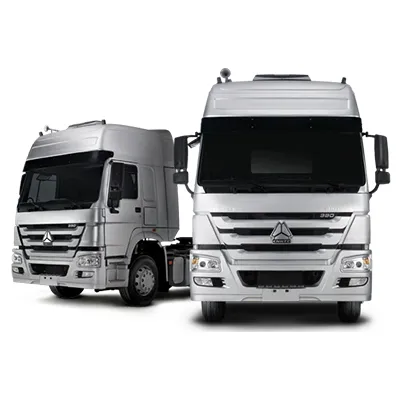
The robust and reliable Sinotruk HOWO 380.
The Sinotruk HOWO 380 has been a familiar sight on African highways for years, and there is a good reason for that. Under the cab sits a 9.726L WD615-series diesel engine pushing out 380 horsepower, with peak torque of around 1,560 Nm landing between 1,200 and 1,500 rpm. That torque curve is what makes the HOWO 380 feel stronger than its paper numbers suggest — it pulls cleanly from low revs, which matters when you are loaded and crawling through a construction site or easing up a gentle highway grade.
Matched to a 10-speed or 12-speed manual gearbox (the HW19710 is a common pairing), the HOWO 380 typically runs at a gross combination weight of 40 to 50 tonnes. In mixed regional haulage, owners commonly report fuel consumption in the 32 to 35 litres per 100km range — and that figure does not balloon quite as fast as you might expect when loads creep up, because the engine is not being pushed to its limit on every trip.
The cabin keeps things simple: a functional dash, decent visibility, and a bunk that does the job on overnight runs. It is not a premium long-haul sleeper, but for the price point, most operators find it perfectly liveable. If your routes are mostly paved, your loads are consistent, and you want a HOWO truck that keeps total cost of ownership predictable, the 380 is hard to argue with.
Sinotruk HOWO 420: The High-Torque Performer
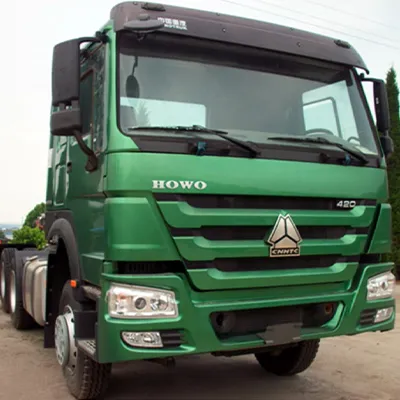
The powerful Sinotruk HOWO 420 tackling extreme loads.
Step up to the Sinotruk HOWO 420 and the story changes quickly. The D12-series engine displaces 11.596L and delivers 420 horsepower with roughly 1,820 Nm of torque coming online as low as 1,100 rpm. That extra displacement and torque do not just look good on a spec sheet — they change how the truck behaves when you are grossing 55 tonnes or more, or staring down a long mountain pass with a loaded trailer.
Fuel consumption for the HOWO 420 typically lands somewhere between 38 and 42 litres per 100km depending on load and terrain. Yes, that is higher than the 380. But here is the thing operators often miss: on punishing cycles, the 420 can actually burn less fuel per tonne-kilometre than a smaller engine working at its limit. The engine is not straining, temperatures stay steadier, and driveline wear tends to be lower over the long run.
Sinotruk also fits the 420 with upgraded cooling and a beefier driveline to handle the extra output. If your work involves heavy-haul logistics, mining site duty, logging, or steep-grade routes where every minute of cycle time counts, the HOWO 420 earns its premium. It is the truck you buy when the job simply cannot afford to slow down.
Head-to-Head Technical Comparison
| Feature | Sinotruk HOWO 380 | Sinotruk HOWO 420 |
|---|---|---|
| Engine Power | 380 HP | 420 HP |
| Engine Displacement | 9.726L WD615 series | 11.596L D12 series |
| Peak Torque | ~1,560 Nm @ 1,200–1,500 rpm | ~1,820 Nm @ 1,100–1,400 rpm |
| Typical GCW | 40–50 tonnes | 50–70 tonnes |
| Real-World Fuel Use | ~32–35 L/100km | ~38–42 L/100km |
| Typical Application | Regional haulage, construction, general freight | Heavy haulage, mining, logging, mountain routes |
| Cost Consideration | Lower upfront and operating cost | Higher upfront, better productivity on extreme duty |
Choosing the Right Truck for Your Needs
The decision between the Sinotruk HOWO 380 and the Sinotruk HOWO 420 comes down to what you actually do with the truck, not which one looks better on a spec sheet. If your work is regular freight on paved highways, urban construction, or bulk commodity runs where the load stays under 50 tonnes, the HOWO 380 is almost always the smarter financial move. You save on the purchase price, you save at the pump, and the truck is not being stressed beyond what it was designed for. Plenty of fleet managers in Zambia and across southern Africa have built their operations around the 380 for exactly this reason.
But if your routes regularly push past 55 tonnes GCW, or you are working in off-road conditions where torque matters more than top speed, the extra 40 horsepower and 260 Nm in the HOWO 420 is not a luxury — it is a working tool. The 420 handles steep grades and soft ground with less gear hunting, less clutch wear, and less driver fatigue. Over a full year of extreme-duty operation, the productivity gain often outweighs the higher sticker price and fuel bill. That is the calculation worth running before you commit.
Final Verdict
Both the Sinotruk HOWO 380 and the Sinotruk HOWO 420 are proven, capable trucks built on Sinotruk’s reliable HOWO platform. The Sinotruk HOWO 380 stands out as the champion of value and efficiency for standard heavy-duty tasks. Its balanced design makes the Sinotruk HOWO 380 a top contender in its class. For the most punishing jobs where power is paramount, the Sinotruk HOWO 420 is the clear winner. Carefully assess your typical load weights, terrain, and operational goals to determine whether the efficient Sinotruk HOWO 380 or the more powerful Sinotruk HOWO 420 is the ideal partner for your business.
Frequently Asked Questions
What is the real fuel consumption of the Sinotruk HOWO 380?
Most operators report 32 to 35 litres per 100km in mixed regional haulage at 40–50 tonnes GCW. On flatter routes with lighter loads, some see it dip closer to 30L. Heavy stop-start work will push it higher.
Is the HOWO 420 worth the extra cost over the 380?
It depends on your duty cycle. If you regularly run above 55 tonnes GCW, work in mining or on steep mountain routes, the 420’s extra torque pays for itself through faster cycle times and less driveline stress. For standard highway freight under 50 tonnes, the 380 is usually the better financial choice.
What is the torque difference between the HOWO 380 and HOWO 420?
The HOWO 380 produces roughly 1,560 Nm at 1,200–1,500 rpm. The HOWO 420 delivers about 1,820 Nm at 1,100–1,400 rpm. That is a 260 Nm advantage, and it arrives at lower revs, which makes a noticeable difference under load.
Can the HOWO 380 handle mountain roads?
It can, but it will work harder. On moderate grades with loads under 45 tonnes, the 380 is fine. For long, steep climbs at maximum GCW, the 420’s extra displacement and torque make the job noticeably easier and safer.
Which HOWO truck is better for mining operations?
The HOWO 420 is generally the better fit for mining. Higher torque at low rpm, upgraded cooling, and a stronger driveline handle the slow, heavy, high-stress nature of mine site work more comfortably than the 380.
What engine comes in the Sinotruk HOWO 380?
The HOWO 380 typically uses a 9.726L WD615-series diesel engine rated at 380 horsepower, paired with a 10-speed or 12-speed manual transmission such as the HW19710.
How much payload can a HOWO 380 carry?
At a typical gross combination weight of 40–50 tonnes, the HOWO 380 hauls roughly 25–35 tonnes of payload depending on trailer type, body configuration, and local axle-load regulations.
